
In sport, in the performance, and even in daily life, we all rely on a system as powerful as it is little understood: the adaptive unconscious.
It's neither magic nor a "sixth sense".
It's a natural neurological ability: the brain's capacity to analyze, sense and decide faster than conscious thought, using an immense amount of information.
Understanding this mechanism, learning to listen to it, then trusting it is one of the most powerful levers I like to work with in my mental training.
What is the adaptive unconscious?
The adaptive unconscious is the part of the brain that:
- picks up micro-signals,
- analyzes the environment,
- anticipates movement,
- draws on experience,
- adjusts posture,
- makes ultra-fast decisions, …without going through conscious deliberation.
Whereas consciousness can process 5 to 15 criteria, the unconscious uses hundreds and certainly an infinite amount.
It's what makes you say:
- “I can feel it.”
- “I know that's the right choice.”
- “I moved at the right time without thinking.”
- “I reacted instinctively.”
- “My body knew before I did.”
That's the essence of intuition.
And it's the foundation of fluidity, creativity, fast decision-making, and the flow.
Libet's half-second: where it all happens
Neuroscientist Benjamin Libet revealed a fundamental phenomenon: between a stimulus and a decision there is a half-second during which the body and the unconscious get moving before consciousness arrives.
During that time:
- the unconscious analyzes,
- chooses a response,
- prepares the action.
Consciousness, by contrast, arrives afterward.
That's why great performances are "instinctive".
We don't have time to think: the body knows, the unconscious acts.
What is the role of the adaptive unconscious in sport and performance?
✔ Act faster than conscious thought

A goalkeeper moves at the right moment thanks to their adaptive unconscious
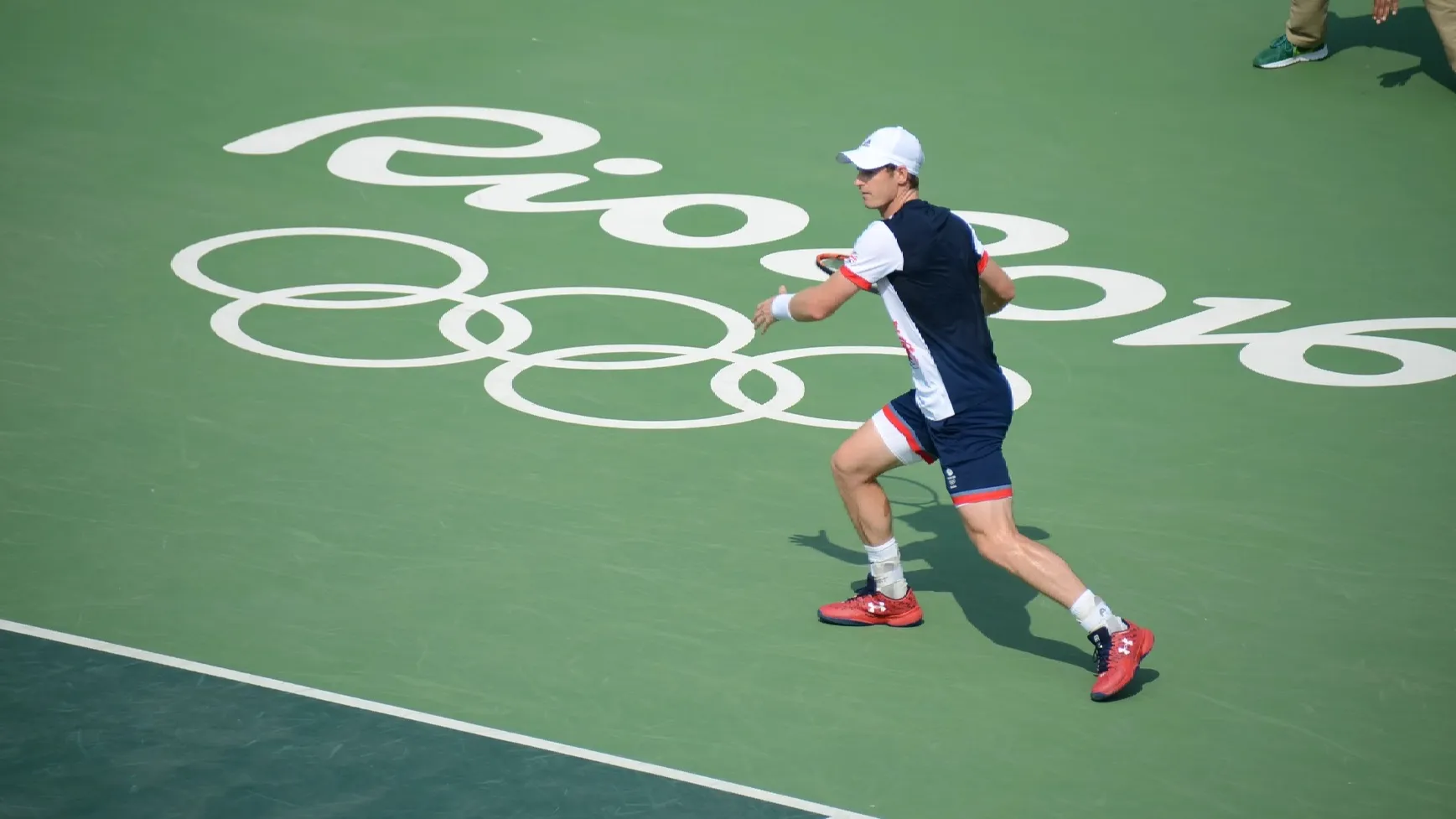
A tennis player reads the ball's trajectory before the stroke

A rider senses the right movement
✔ Access reliable intuition
Intuition isn't random: it's consciousness receiving the outcome of unconscious processing.
✔ Make movements fluid
The less you think, the purer the movement becomes.
✔ Facilitate concentration and focus
The unconscious works better when the intention is simple and clear.
That's what I help build: a single, stable focus on the task — through, among other things, anchors for goal-setting and concentration routines.
✔ Open the door to Flow
The flow (or "zone") appears when:
- the emotion is stable,
- the fear disappears,
- the confidence rises,
- the conscious mind lightens,
- and the unconscious takes control.
I am deeply convinced that the flow is the full expression of the adaptive unconscious.
How I use this concept in my mental training sessions
➡️ Understand how it works
You can't simply will confidence into being. Confidence is built.
When an athlete understands that:
- their intuition is based on real data,
- their unconscious picks up imperceptible information,
- their body knows before their head,
- their decision speed is natural,
then they increase their ability to dare to trust themselves. And that's a major inner shift.
➡️ Allow intuition as an entry point
Intuition is the visible manifestation of the adaptive unconscious.
So by working on intuition, we:
- recognize internal signals,
- learn to listen to them,
- reduce over-control,
- unlock fluidity.
It's often in those moments that the athletes I coach tell me:
“Actually, I already knew…”
Yes — it was the adaptive unconscious speaking.
The clearer the goal, the more the unconscious optimizes.
➡️ Goal: access to Flow
By understanding how the unconscious works, the athlete:
- lets go of unnecessary control,
- avoids over-analysis,
- lets themselves be guided by their automatic processes,
- enters the zone more easily.
➡️ Depolarize emotions that disrupt the unconscious
When the unconscious is disrupted by:
- the fear,
- anger,
- pressure,
- intimidation,
- judgment,
the performance can be genuinely affected.
The depolarization:
- dissolves emotional burdens ,
- stabilizes the nervous system,
- allows the unconscious to operate freely.
It's an essential tool to facilitate intuition and the flow.
How does this boost confidence?
Because confidence doesn't come from a phrase like:
"Come on, trust yourself."
Confidence comes from understanding your internal mechanisms.
When an athlete understands:
- that they have a powerful automatic intelligence,
- that they can analyze faster than they think,
- that their body can do it,
- that their intuitions are reliable,
- that their performance depends less on control and more on fluidity,
then they give themselves permission to be good.
It's that inner permission that changes everything.
This is how we move from:
Over-control → stress → errors → doubt
to
Awareness → confidence → fluidity → performance
Discovering the existence of your own “adaptive unconscious” is discovering an additional inner strength.
Our greatest performances don't come from deliberate thinking.
They come from:
- our intuition,
- our automatic skills,
- our feelings,
- our deep experience,
- our adaptive unconscious.
My mental training sessions aim to help each person:
- understand this mechanism,
- recognize it,
- embrace it,
- give it trust,
- and let it express itself.
“Because the more a person understands this automatic intelligence, the more they trust themselves and the more they perform — in sport, in competition, and in life.”