
What is self-confidence?
Whether in the media, at school, in elite sport — and in the public imagination — self-confidence is often presented as something you either have or you don't. As if some people are naturally endowed and others are not. As a mental trainer I can assure you: that's not the reality.
Self-confidence is not a fixed trait. It's a lived experience that evolves, fluctuates… and, above all, that can be worked on. In fact, it's something we systematically address whatever the initial request. Managing emotions, stress, preparation for a competition, … any subject, any learning leads to improving self-confidence.
Let's dive a little deeper!
Self-confidence is a perception
In psychology, self-confidence refers to the perception one has of their ability to cope with a situation, to act effectively and to reach a goal. It is therefore not an objectively measurable ability. It's a subjective evaluation: "Do I feel capable of... ?" Two people with the same skills can experience a situation in completely different ways: one feels ready, the other doubts.
And why? Because self-confidence depends above all on the interpretation we make of the situation.
Feeling capable of acting: a key element
The work of psychologist Albert Bandura* helps clarify this mechanism. He speaks of perceived self-efficacy: the belief an individual has in their ability to organize and execute the actions necessary to reach a goal. In other words, self-confidence doesn't rely only on "who I am", but on what I think I can do in a given situation. That's an important nuance.
Self-confidence is not the same as being certain of yourself
Many people confuse confidence with certainty. And that's a major difference. Being confident is not being guaranteed to succeed. It's daring to act without a guaranteed outcome. I like to repeat: "Self-confidence is giving it a try." It's stepping into action with an inner agreement: "I don't know exactly what will happen… but I can go for it, I want to go for it."

Self-confidence in real situations: the ability to commit despite uncertainty
Believe in yourself… or believe in your ability to learn?
It's common to hear "you must believe in yourself." You also hear: what's important is that you enjoy it. Well that's another topic. ➡️ Enjoying competition, is it really possible?
Except that this idea can actually create pressure. My approach is more about helping you say to yourself: I am capable of succeeding… or of learning to get there.
In short:
- Believing I must already be ready → a block
- Believing I can learn → openness
👉 That's exactly what makes self-confidence empowering, not paralyzing.
Self-confidence is an emotion
Many also think confidence is something stable. But if that were the case, why has Teddy Riner always worked on his mental training? In reality, it functions like an emotion. It is an emotion! And it is always fluctuating, contextual (situational) and influenced by how it feels.
A very common example: feeling confident in training… and much less so in competition. Another: confident at work… but doubting in a relationship.

👉 Nothing abnormal. Self-confidence is not a level to reach. It's a state that is constantly evolving. The work of mental training is to help each person develop a more solid but above all a "right-sized" confidence — one that integrates doubt. Doubt is also perfectly normal, natural and ultimately useful.
Why confidence fluctuates: lenses, beliefs, experiences, interpretation
Concretely, self-confidence does not depend directly on your real abilities. It goes through internal filters: beliefs, past experiences, our self-talk and our cognitive biases. We don't necessarily react to reality. Most often we react to the interpretation we make of it.
Confidence is an integrated system
I would say self-confidence isn't only played out in the head. It's as much mental → thoughts, beliefs, as emotional → fear, excitement, pressure, and bodily → breathing, tension, sensations.
And where does self-confidence come from?
I find Albert Bandura's approach very relevant: he explains that self-confidence is built from four main sources:
1. Experiences of success
And I agree. It's the most powerful source. What you go through strengthens your perception of capability.
2. Observation
By example — when we see other people succeed.
3. The environment
Encouragement, feedback, others' perceptions.
4. Physical and emotional state
Stress, fatigue, energy… these also directly affect how you feel.
Confidence, self-esteem, self-assurance
Key points: don't confuse
- Self-confidence → feeling capable of acting
- Self-esteem → valuing yourself
- Self-assurance → showing a form of certainty
👉 You can appear self-assured without being confident.
👉 And be confident without necessarily showing it.
How to develop self-confidence
Here are several concrete avenues we work on in mental training:
Clarify your own definition
What does "having self-confidence" really mean to you?
Observe your self-talk
Thoughts directly influence your state:
- "I'm not ready"
- "I'm going to fail"
- "I have to succeed"
Rely on your experience, what you've already been through
Confidence is built on experience:
- what you've succeeded at
- what you've learned
- your real progress
Work on managing emotions
Managing stress, fears and pressure.
👉 Self-confidence inevitably involves the body.
Accept that it fluctuates
Seeking constant confidence is a mistake.
The real goal is: move forward even when self-confidence is unstable. Each small step is still a step, and every step is progress.
Why seek support in mental training
In sport, work or personal life, high-stakes situations can disrupt self-confidence. And with mental training sessions you can work on that self-confidence.
Working with a coach helps you to:
- understand the mechanisms at work
- adjust your beliefs
- regulate your emotions
- build a more stable and appropriately adapted self-confidence
Whether you're:
- athletes (from recreational to elite)
- students
- professionals or leaders
- in transition or facing an important situation
Self-confidence isn't a gift. It's a skill that can be developed, notably through mental training.
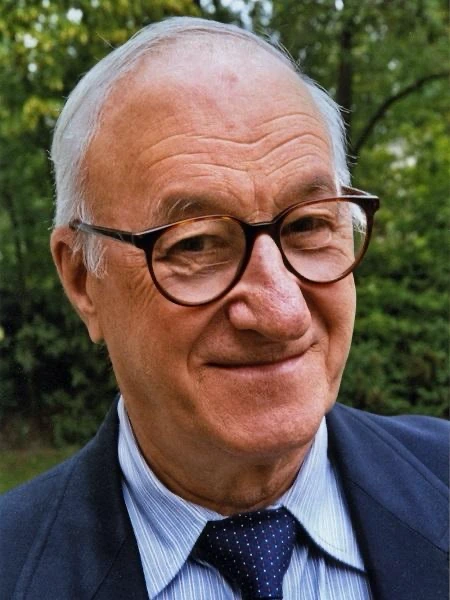
Albert Bandura (1925–2021) was a Canadian psychologist, considered one of the major figures in modern psychology. He is best known for having profoundly renewed our understanding of learning, motivation… and self-confidence. Bandura showed that we don't learn only through direct experience (trial and error), but also by observing others. 👉 This is the basis of what he calls social learning theory.